


When it comes to managing your money, one of the most common questions is: Should I save or invest? The truth is, both play essential roles in your financial journey—but they serve different purposes.
In this guide, you’ll learn the key differences between saving and investing, their pros and cons, and how to strike the right balance to achieve your financial goals.
Saving and investing differ mainly in their purpose, risk level, and time horizon. Saving typically involves putting money into secure, easily accessible accounts such as savings accounts or emergency funds. It is designed for short-term goals and financial stability, offering low risk but also relatively low returns. On the other hand, investing means allocating money into assets like stocks, bonds, or mutual funds with the expectation of generating higher returns over time, though it comes with greater risk and market fluctuations.
Each approach has its own advantages and drawbacks. Saving provides liquidity and peace of mind, making it ideal for emergencies or planned expenses in the near future. However, it may not keep up with inflation, which can erode the purchasing power of your money. Investing, while riskier, offers the potential for wealth growth and helps you stay ahead of inflation, especially over the long term. The trade-off is that investments can lose value in the short term, requiring patience and a higher risk tolerance.
To build a strong financial foundation, it’s important to strike a balance between saving and investing. Start by setting aside an emergency fund covering three to six months of living expenses. Once you have this safety net, you can begin investing for long-term goals such as retirement or wealth accumulation. By combining both strategies thoughtfully, you can protect your finances while also growing your wealth over time.
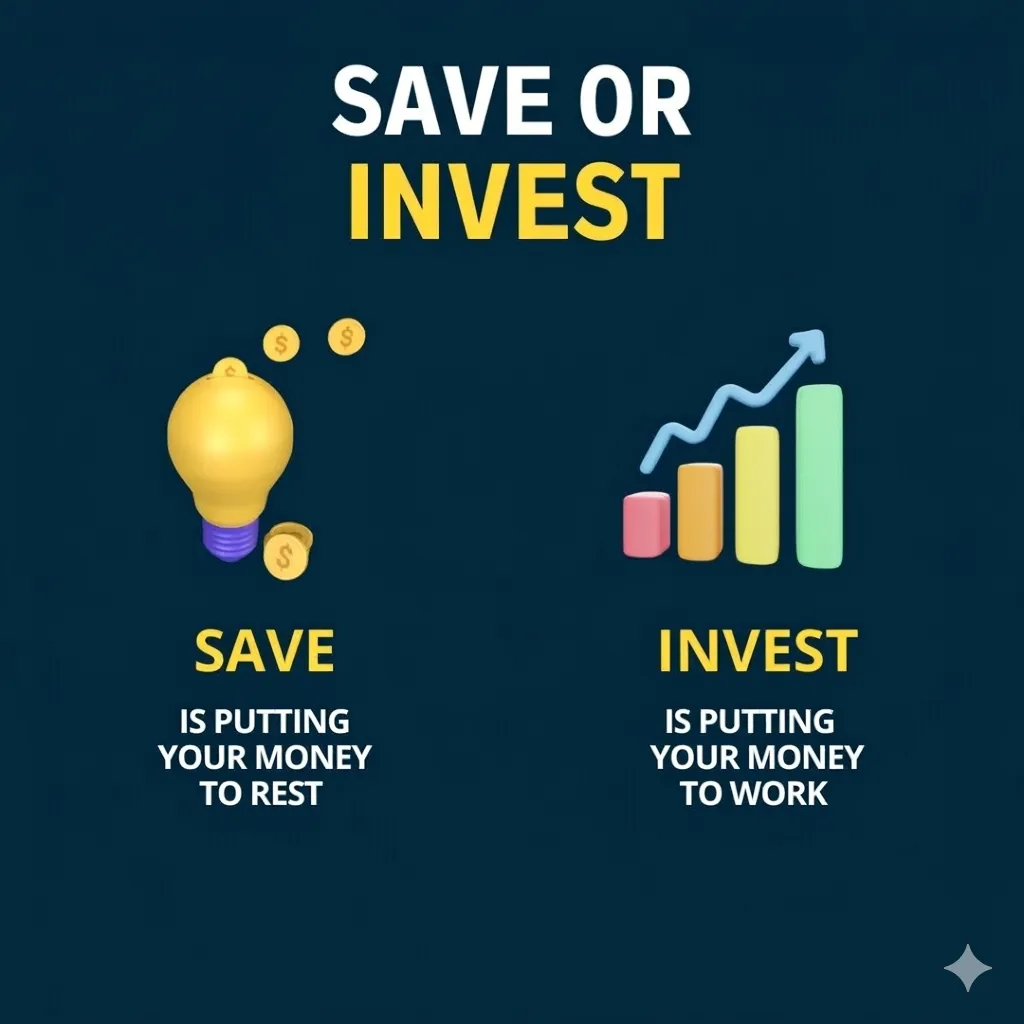
Save vs Invest: What’s the Difference?
Saving and investing are often confused, but they are two distinct strategies:
- Saving focuses on preserving money for short-term needs and emergencies.
- Investing aims to grow your wealth over the long term by taking calculated risks.
Instead of choosing one over the other, the smartest approach is to use both strategically.
Why Saving Is Important (Should I Save or Invest?)
Saving is all about financial security in the present. It ensures you have access to cash when you need it most.
Benefits of Saving
- Immediate access to your money
- Low risk (your capital is generally safe)
- Ideal for emergencies and short-term goals
What Should You Save For?
Savings are best suited for:
- Emergency funds (unexpected expenses like medical bills or repairs)
- Short-term goals (vacations, gadgets, home upgrades)
- Monthly expense buffers
Financial experts typically recommend setting aside 3–6 months of living expenses in an easily accessible account.
The Downside of Saving
While saving is safe, it has one major drawback:
- Low returns – your money may not grow significantly over time, especially after inflation
Why Investing Matters
Investing is designed to build wealth over time. By putting your money into assets like stocks, bonds, or funds, you give it the potential to grow.
Benefits of Investing
- Higher potential returns compared to savings
- Compounding growth over time
- Ideal for long-term goals like retirement
Common Investment Options
- Stocks (equities)
- Bonds
- Mutual funds or ETFs
- Real estate
The Trade-Off: Risk vs. Reward
Investing comes with risks:
- Market fluctuations can cause your investments to rise or fall
- Short-term investing can be unpredictable
However, over the long term (5–10+ years), markets tend to smooth out volatility, offering better growth potential.
Can You Reduce Investment Risk?
Yes—smart investors don’t rely on a single asset.
Use Diversification
Diversification means spreading your money across different investments to reduce risk. For example:
- Mix stocks and bonds
- Invest in different industries or regions
- Use funds instead of individual stocks
This strategy helps protect your portfolio from major losses.
How to Decide: Save or Invest?
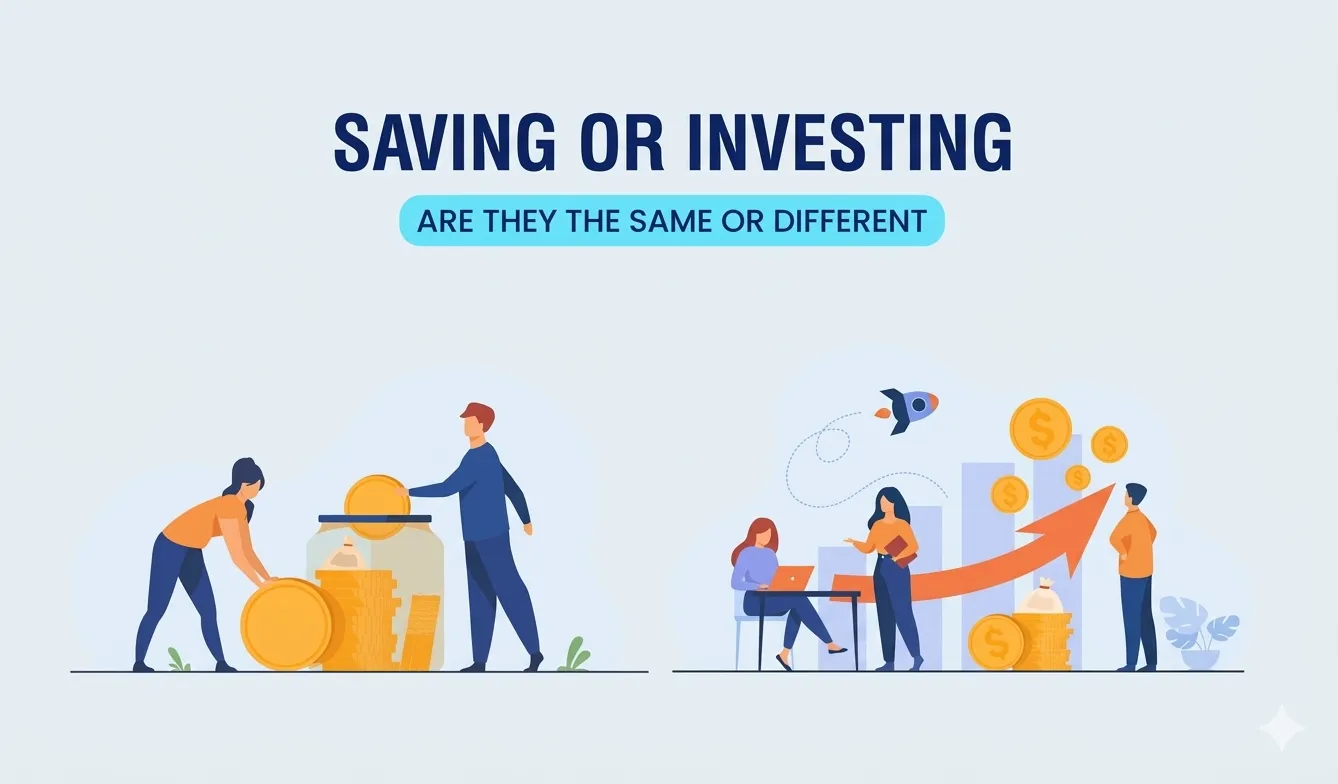
To choose wisely, ask yourself these key questions:
- How soon will I need the money?
- Less than 3 years → Save
- More than 5 years → Invest
- What is my risk tolerance?
- Prefer safety → Save more
- Comfortable with risk → Invest more
- Do I have an emergency fund?
- Not yet → Start saving first
- Already built → Begin investing
The Best Strategy: Do Both
The most effective financial plan combines saving and investing:
- Short-term (0–3 years): Focus on saving
- Medium-term (3–5 years): Balanced approach
- Long-term (5+ years): Focus on investing
This balanced strategy ensures:
- Financial stability today
- Wealth growth for tomorrow
Should You Talk to a Financial Advisor?
If you’re unsure how to allocate your money, a financial advisor can help you:
- Define clear financial goals
- Build a personalized plan
- Balance risk and return effectively
Professional guidance can give you confidence and clarity in your financial decisions.
Final Thoughts
So, should you save or invest? The answer isn’t one or the other—it’s both.
- Save for security and short-term needs
- Invest for growth and long-term wealth
By combining these strategies, you can create a strong financial foundation and move closer to financial freedom.